Every time a leadership team adds a new member or replaces existing members, the team dynamics shift and need readjusting. We often find there is a natural divide that happens between the newer members and those who have been at the company or on the leadership team for years.
The veterans on the team might have a tendency to:
- Think they are better than the newer members because they know more about the company;
- Compare the new members to the previous occupants of those roles;
- Have an attitude of “that is how we have always done it”;
- Need much time before they can start trusting or respecting the new members.
On their part, the new members might:
- Think they are better than the veteran members of the team because they are bringing in a fresh outside perspective;
- Be younger and therefore feel they are more up-to-date with new technologies and approaches to the business.
These perspectives can make it tough to create a collaborative team environment. This is why changes in the leadership team makeup are among the pivotal times when engaging in team development work can be most beneficial.
Stages of Team Development
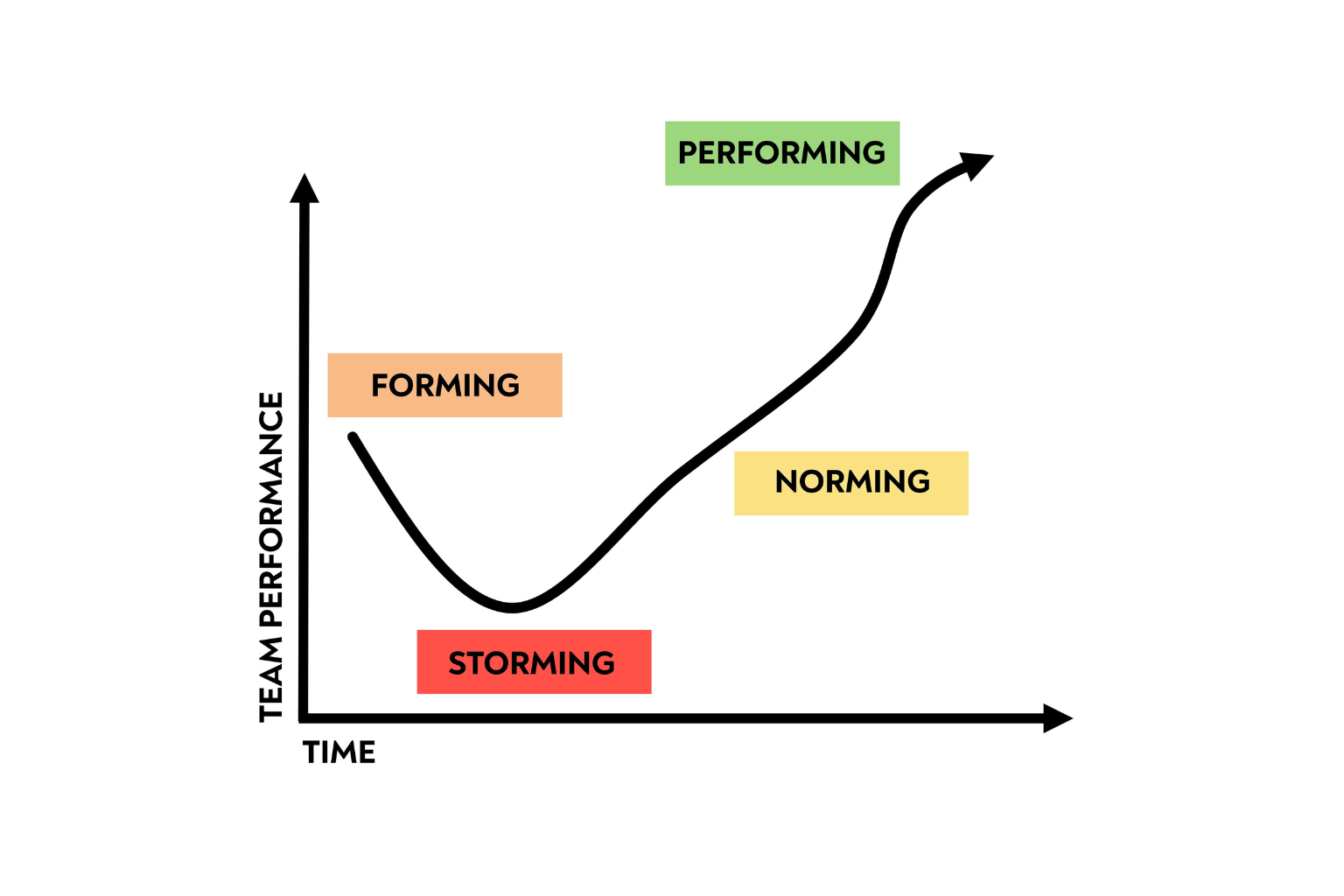
We like this model by Bruce Tuckman to illustrate the Stages of Team Development. The model is from the 1970s but still offers a strong view of how teams come together.
Stage 1: Forming
- Team and task orientation
- Ground rules identified for the team
- Dependent on the team leader
Stage 2: Storming
- Team members get to know each other, and understand their roles and responsibilities
- Uncertainty, anxiety, and resistance from the team
- Conflict and crises among the team
Stage 3: Norming
- Team members begin to work together and adjust their habits and behaviors
- They exchange information and emotional support
- Cohesion begins to form
Stage 4: Performing
- Team members are acting like one, interdependent and adjusted
- The team can start working with less supervision
- They achieve sustainment of tasks
Going Back To The Basics
Every time you have new members joining in, you are essentially dealing with a new leadership team and must start over with the Forming stage. Discussion points for team meetings could be:
- What is our meeting schedule and structure?
- How do we handle conflict on this team?
- How do we determine what stays within the leadership team and what we can share with our direct reporting teams?
- What kind of support does each leader need from the other team members?
- How do we make decisions as a team? When does the leader make unilateral decisions?
These topics may seem redundant to the team members who have been on the team for some time. Yet there is power in coming back to the basics to set the tone for the new team to find alignment.
After that, using assessment tools and sharing each person’s results with the team can help members get to know – and appreciate – each other’s strengths and innate ways of operating. The tools provide a common language to discuss how the members can support each other to deliver their best work. When done right, this type of sharing will strengthen the team’s bond very quickly.
At Leadership Roadmap, we always start with the inquiry about where the team is in their stage of development and what it needs take to move up the line to STORMING, NORMING and PERFORMING.
Read more about our approach to leadership team development.
